My Pipevine Fascination
Over the past few years, I have developed a small obsession, or perhaps "fascination" is the better word. It started simply enough: I began noticing black butterflies dancing along my usual walking trails. At first, there were just a few, but soon I was seeing them everywhere. They were striking, and I felt a pull to know more about them.
After a little investigation, I discovered they were Pipevine Swallowtails.
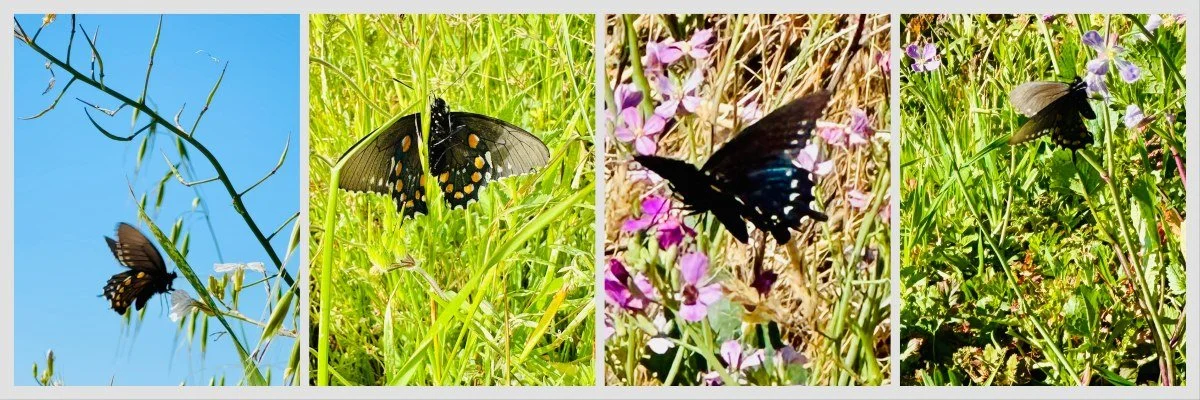
Pipevine swallowtail butterflies found on my walks.
Soon after, I began noticing little black caterpillars along certain sections of the trail. They reminded me of the "Fuzzy-Wuzzy" caterpillars (Woolly Bears) from my childhood, but they were slightly different. They managed to bring out my inner child, and once I confirmed they were indeed the Pipevine larvae, my fascination grew.
A Hidden, Toxic World
As I dug deeper into their world, I learned that these butterflies are inextricably linked to one specific plant, the California Dutchman’s Pipevine. It is their host plant, the only thing the caterpillars can eat and the only place the butterflies will lay their eggs.
I was surprised to learn that while these plants are highly sensitive to environmental loss, they are thriving right here on the trails near my home. The Pipevine plant is poisonous to most living things, but the caterpillars have evolved to thrive on it. By eating the leaves, they become poisonous themselves, advertising their toxicity to predators with bright red spots.
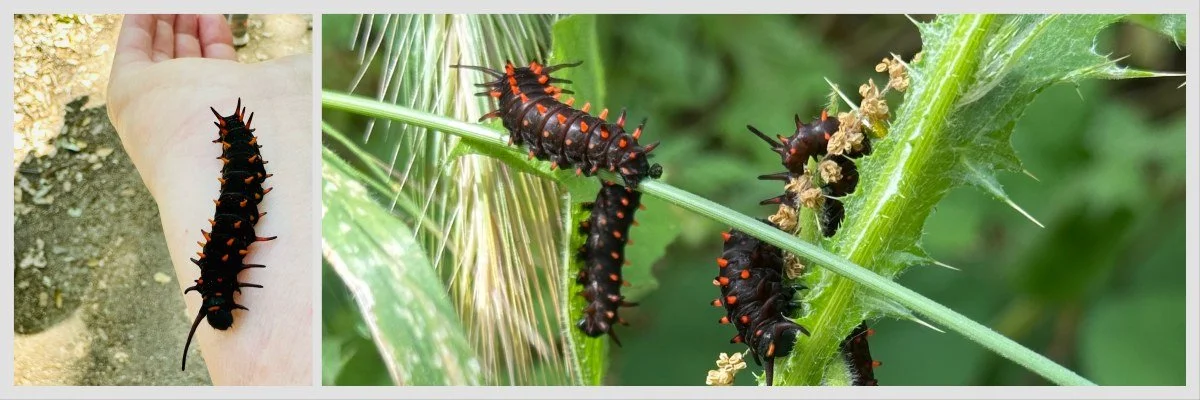
Pipevine swallowtail caterpillars.
Despite their chemical defenses, they are safe to handle gently. I often find them wandering into harm's way on the hiking trail, so I’ve made it a habit to pick them up and move them back to safety. Through this obsession, I’ve learned to identify the vine by its leaves, and I have spent hours photographing every stage: the larvae, the chrysalis, and eventually the butterfly in studio conditions.
The Missing Piece: The Flower
For a long time, I went on my merry way, thrilled with my knowledge. Then, a couple of years ago, I realized I was missing something, the flower. I knew all plants had flowers, but I had never seen one on the Pipevine. I discovered that the plant gets its name because the bloom looks like a little curvy Dutchman’s pipe. The reason I had missed them is that they emerge in late winter and early spring when the vine itself is still naked. I started keeping a sharp eye out, and finally, one year, I found them.
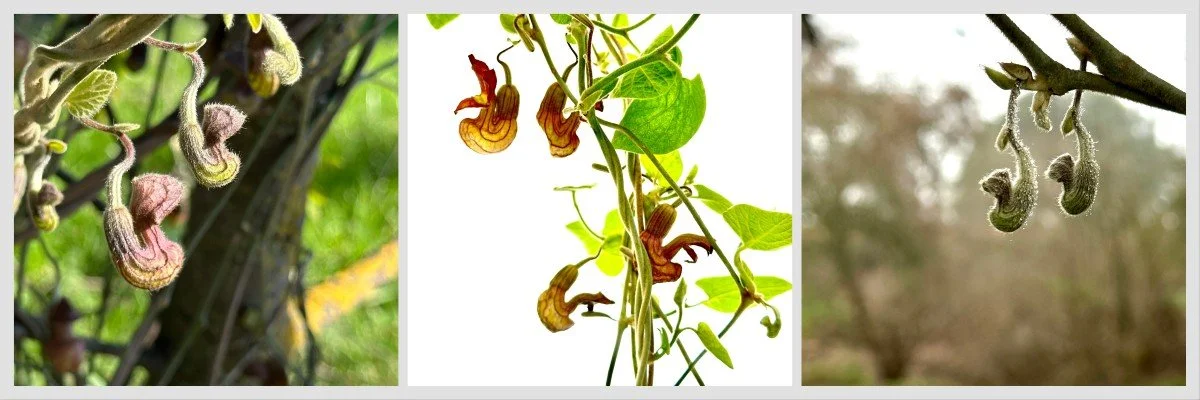
California Dutchman’s Pipevine flowers, on the trail and in the studio.
This year, I was out early looking for overwintering chrysalises (which I still haven't found!) when I spotted the very first Pipevine flowers, tiny, delicate things growing before the first leaves even appeared.
The Cycle Continues
My observations have become even more granular. This February, I spotted the very first Swallowtail of the season. I’m not sure if these early arrivals will get a chance to reproduce, depending on how long they live and how quickly the leaves grow, but I’m excited to watch it unfold.
A few years ago, I created an artwork featuring the different stages of the butterfly and the Pipevine leaves. At the time, I didn't even realize I was missing the flower! Now that I’ve photographed the blooms, I feel the need to return to that piece. As the vines and butterflies reveal more of their cycle to me, I want to honor them by "growing" the artwork to match.
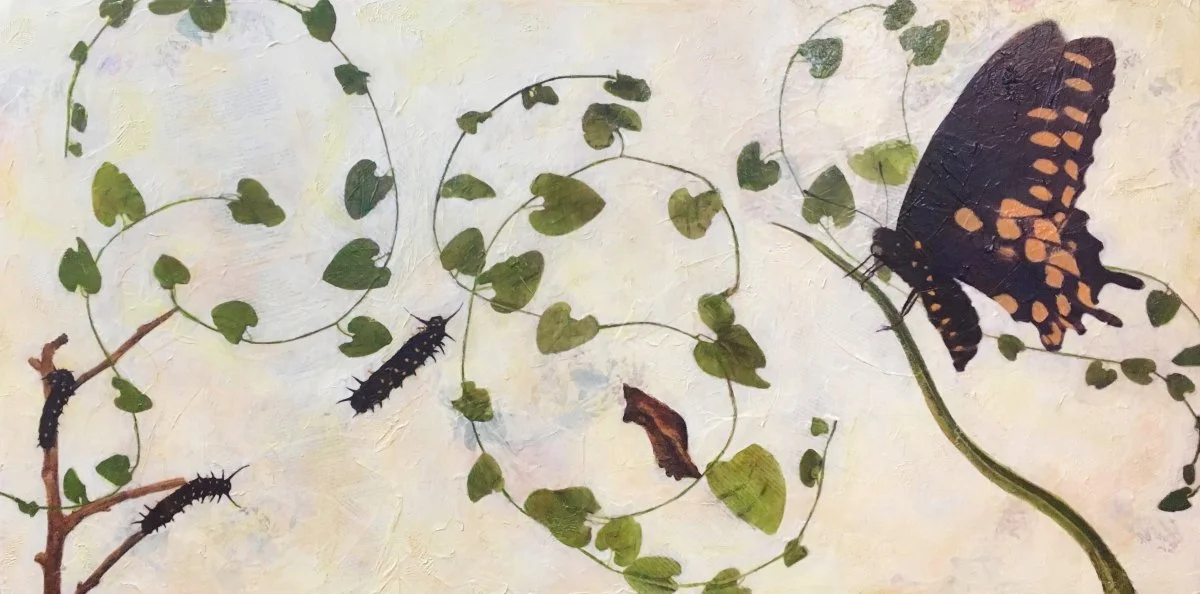
“Rhythms of Grace” in its current state. I think it needs a couple of flowers, don’t you?
What are you noticing?
We have an incredible amount of information at our fingertips these days. While that technology is often used for negative things, it’s a beautiful tool for connecting with the world around us.
What is a small thing you’ve noticed in nature lately? Maybe it's something in your yard or on a local trail. I'd love to hear what's sparking your curiosity.