Breathing In: The Practice of the Slow Hike
I often talk about the things I find on the creek trails and neighborhood streets near my house. I like to call these "slow hikes." The term connects to the slow living movement, which prioritizes quality over quantity. It is not about doing things in the fastest way possible, but in the most fulfilling way.
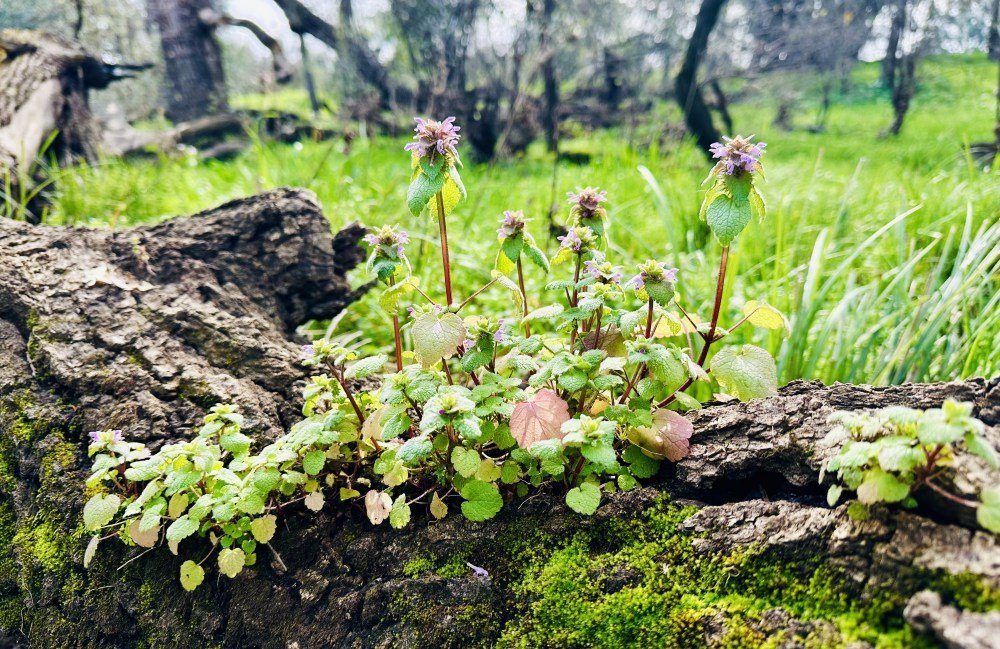
Henbit Deadnettle growing on a log along one of my local trails.
That philosophy certainly applies to my walks. When I head out, it is for a variety of reasons. Getting myself and my dog out of the house for physical exercise is the first and most obvious. But getting outdoors into the fresh air also invigorates me; I am not a person content to be confined by four walls for very long. I have learned there is so much to be discovered in nature, even in suburbia, and that beauty is only magnified when I step into even slightly wilder areas.
Unexpected Finds and Faithful Companions
My walks have almost always included at least one dog, which naturally slows the pace. On more than one occasion, it has been a dog’s nose that led to an interesting find. Just last week, my dog, Ginty, stopped to inspect what appeared to be a snake’s spine and ribs. It was not something that came home with me, but it was fascinating, nonetheless.
I am rarely looking for a specific object when I go out. Instead, I try to keep my eyes and mind open to whatever presents itself. The very first time I photographed a dead bird was because it was lying directly in the middle of the sidewalk. It was a young chick that had fallen from a nest overhead, and I was struck by its melancholy beauty.
I stopped to photograph it with my phone, wishing I could place it on a cleaner background. As I started to walk away, I realized that since I was walking dogs, I had a perfect little plastic bag with me. I used it to safely pick up the small creature so I could take it home and make its portrait in a way that offered respect and beauty. It was years before those early photographs started making their way into my finished artwork.
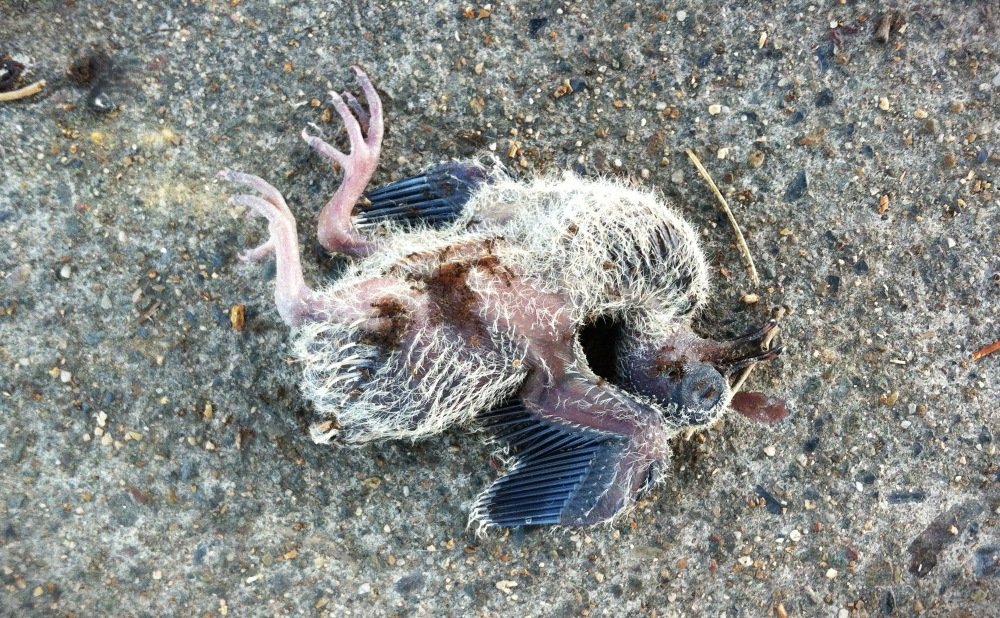
That first found fallen dove chick, 2012.
From the Trail to the Studio
That is how the process happens. I will find a specimen that speaks to me with a form and beauty I cannot entirely explain. I may not know how I will use it until things finally come together in the studio, whether that happens sooner or later.
When I am walking along the creek trails, I feel especially invigorated. There are so many details all around me that I know I cannot possibly see or appreciate them all. I often walk with a friend who shares this fascination with the natural world. Having another set of eyes and ears is incredibly helpful; my walking companions often see a detail first.
Prioritizing the "In-Breath"
I give these walks a high priority in my schedule, usually allowing at least an hour a day, and sometimes as many as three or four hours for a single excursion. To make room for this, other activities get less time. Because I usually walk in the morning, I often work on my art later into the evening. I have always been a night owl, so being productive later in the day works well for me. Even the college class I teach is often an evening class, perfectly fitting my preferred schedule.
Allowing myself this time means I am in less of a hurry. It is perfectly fine to stop and inspect a plant, a tree, or an insect, because that time is intentionally allotted for the practice. Julia Cameron, author of The Artist’s Way, calls this "breathing in." An artist cannot simply create, or "breathe out," without taking something in first. Paying attention to the natural world has always been my highest form of inspiration.
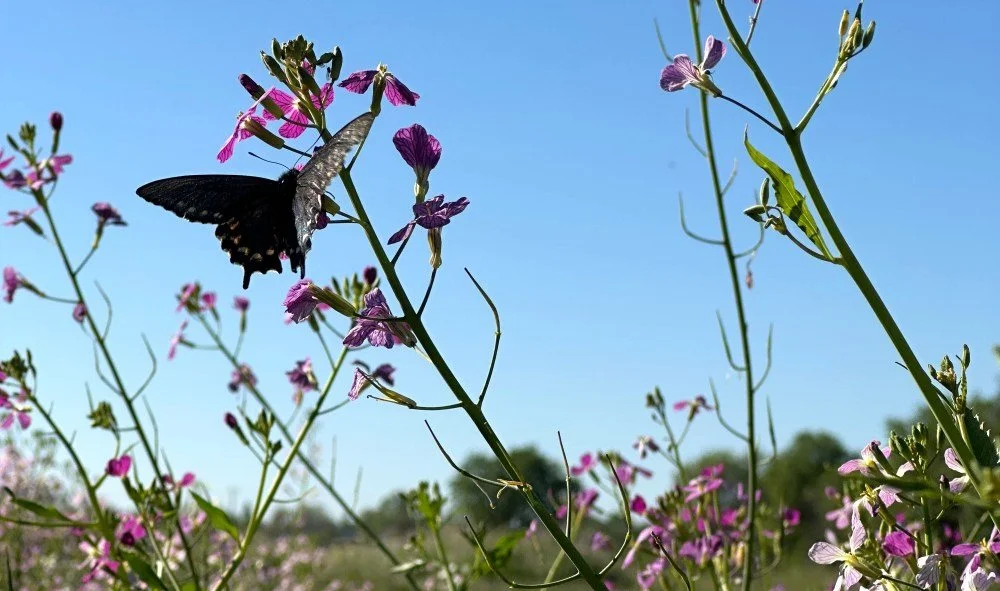
I’m always in awe watching the Pipevine Swallowtails.
Maintaining Childlike Wonder
On my walks, as in the rest of my life, I have learned to engage in childlike wonder. I take in the world with wide-open eyes, never assuming I know what is around the next corner, even when I have walked a trail more times than I can count.
Finding the next lovely specimen requires being ready for it. Walking the same trails over and over actually sharpens my vision. Because I am so familiar with the place, I am much more likely to notice something new or different. It is like knowing a friend so well that you can tell something is going on inside of them without them uttering a single word.
An Invitation: Mini-Field Studies Workshop
I have been considering offering a mini-field studies workshop, taking a couple of people for a four-hour walk along my local creek trails. It would be a casual, slightly quirky morning with Ginty along for the ride.
I am not sure if this is something others would be interested in, but if it appeals to you, please let me know. I usually go on weekday mornings, but I could make a Saturday morning available as well.
What do you think? Would a morning walking the trails be of interest to you?